Where does art end and obscenity begin?
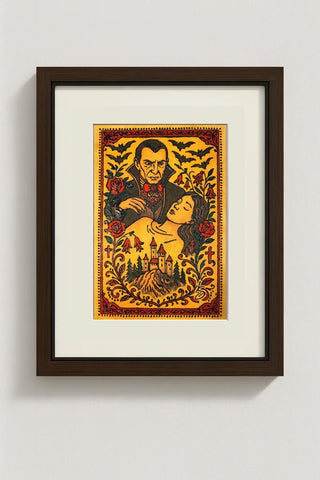
Dracula, Lolita, Love in the Time of Cholera, The Picture of Dorian Gray, and Interview with the Vampire all deliberately lead us into uncomfortable territory: sexuality, obsession, corruption, violence, exploitation, and forbidden desire. Yet depicting something disturbing is not the same as endorsing it. Dracula transformed Victorian anxieties about sexuality and transgression into Gothic horror, while The Picture of Dorian Gray used decadence and moral corruption to question the relationship between beauty and goodness. Interview with the Vampire similarly surrounds its beautiful, immortal characters with predation and death. Art can make evil seductive precisely because it wants us to confront the uncomfortable fact that beauty and morality are not always the same thing.
That distinction becomes much more difficult in Lolita and Love in the Time of Cholera, because both place troubling behavior inside extraordinarily beautiful language. Humbert Humbert attempts to turn his abuse of Dolores Haze into an exquisite love story, forcing the reader to recognize how eloquence itself can manipulate our sympathies. Florentino Ariza likewise constructs a romantic mythology around a lifelong obsession with Fermina, asking us to consider when devotion becomes possession and whether beautiful storytelling can cause us to romanticize conduct we would judge differently outside the novel. These books make the boundary between art and obscenity uncomfortable because the form may be beautiful even when the behavior it describes is not.
Perhaps, then, obscenity cannot be defined simply by sex, violence, or taboo subject matter. The more important question is what the artist asks us to do with it. Does the work merely exploit another person's suffering or sexuality for sensation, or does it transform discomfort into examination—of desire, power, morality, mortality, or ourselves? These novels endure partly because they refuse to make that distinction easy. Art does not necessarily end when it becomes offensive or disturbing. It may end when provocation becomes the destination rather than the means—when there is nothing beyond the shock that asks us to see, question, or understand something differently.