What is the meaning of life?
Across The Little Prince, The Alchemist, Moby-Dick, Illusions, Zen and the Art of Motorcycle Maintenance, The Stranger, and the writings of Edgar Allan Poe, life does not arrive with its meaning neatly explained. Melville’s Ahab destroys himself trying to force the universe to reveal what lies behind its mysteries, while Camus’s The Stranger confronts the unsettling possibility that the universe may be indifferent to us altogether. Poe repeatedly places his characters before death, loss, beauty, and madness, where certainty collapses. Together, these works suggest that perhaps the wrong question is “What does life mean?” if we expect the universe to provide a single answer.
Instead, meaning emerges through the way we live. Santiago in The Alchemist discovers that pursuing his Personal Legend matters as much as reaching the treasure; Richard Bach’s Illusions treats reality as something we participate in interpreting rather than merely endure; and Zen and the Art of Motorcycle Maintenance searches for “Quality” in the union between how we think and how attentively we engage with what we do. Meaning, then, is neither pure fate nor pure invention. It develops through choice, curiosity, craftsmanship, experience, and the willingness to pursue something that feels worth pursuing—even when certainty is impossible.
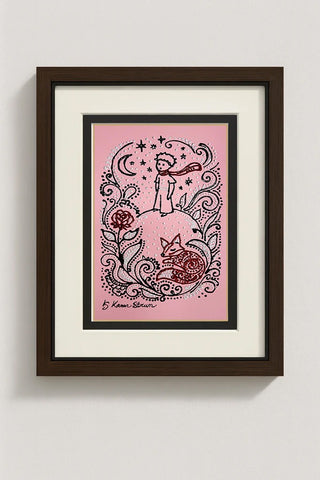
And perhaps The Little Prince supplies the most human answer: meaning grows from what we choose to care for. A rose becomes unlike every other rose because of the relationship created with it. Against Ahab’s obsession, Meursault’s indifferent universe, and Poe’s ever-present mortality, that small act of attachment becomes surprisingly profound. Life may have no universal meaning waiting to be discovered; its meaning may be created through the people, purposes, experiences, and responsibilities to which we give ourselves. The universe does not necessarily tell us what matters. We decide what matters—and then, by caring for it, make it matter.